
Sex Offender Checks in Audubon County
The Iowa Sex Offender Registry is the main public search channel for Audubon County. Iowa DPS, Division of Criminal Investigation operates it as a distinct chapter 692A public-notification system. It is not a general criminal-history database. Searches may begin with a name, alias option, ZIP code, address or map area, or a watch tied to a place or registrant.
Choose the channel that fits the safety question. A name search is useful when identity is known. A geographic query helps with a neighborhood or route. A watch adds notice after registered data changes. The public agreement states that the website does not contain Iowa's entire registrant list, so a blank public result should not be turned into a broad claim about a person.
Audubon Registry Work in Suite 4
Non-DOC registrations are completed at county sheriff offices. In Audubon County, the registration contact is the Audubon County Sheriff's Department at 318 Leroy Street, Suite 4, Audubon, Iowa 50025. Call 712-563-2631 to confirm the appointment process. No local page publishes a separate registry schedule or payment method.
The sheriff's office handles the county-facing registration step, while DCI operates the statewide public system. Iowa Code section 692A.110 governs registration fees and civil penalties. Verification frequency depends in part on statutory tier. Address changes must be reported in person within five business days, and people moving to or visiting Iowa generally have five days to register under the registry's public guidance.
Registration at Suite 4 should not be confused with a public search request at the counter. The statewide website supplies the public profile, map, and watch functions. The sheriff is the right official contact for local registration procedure and suspected Audubon County noncompliance. The county's official department staff page confirms the local agency structure. That split keeps a safety inquiry directed to the office that can act on it.
How to Search the Iowa Registry
Open the Iowa Sex Offender Registry and review its conditions before searching. The basic screen can use first and last name, include aliases, and narrow by ZIP code. Advanced and map routes add other ways to locate public entries. Telephone and email searches help check ownership of those identifiers where the system provides them.
- Review and accept the registry's public-use terms when required.
- Choose a name, alias, ZIP, address, map, telephone, email, or watch route.
- Match the result through several public fields rather than relying on a name alone.
- Open the profile and read its status, offense, address, tier, and update information in context.
| Field or Control | Type | Required | Notes |
|---|---|---|---|
| Last Name | Text | No or unspecified | Basic name search |
| First Name | Text | No or unspecified | Narrows a name query |
| Also Search Aliases | Checkbox | No | Includes registered aliases |
| Zip Code | Text | No | Geographic narrowing |
| Address or Map Search | Map and address inputs | No | Locates public entries by area |
| City, County, or ZIP Watch | Account watch | No | Free Okta account for alerts |
| Telephone or Email Search | Specialized input | No | Checks identifier ownership where provided |
| Search | Button | No | Runs the query |
The official registry search shown below is the statewide source for an Audubon County sex offender lookup.
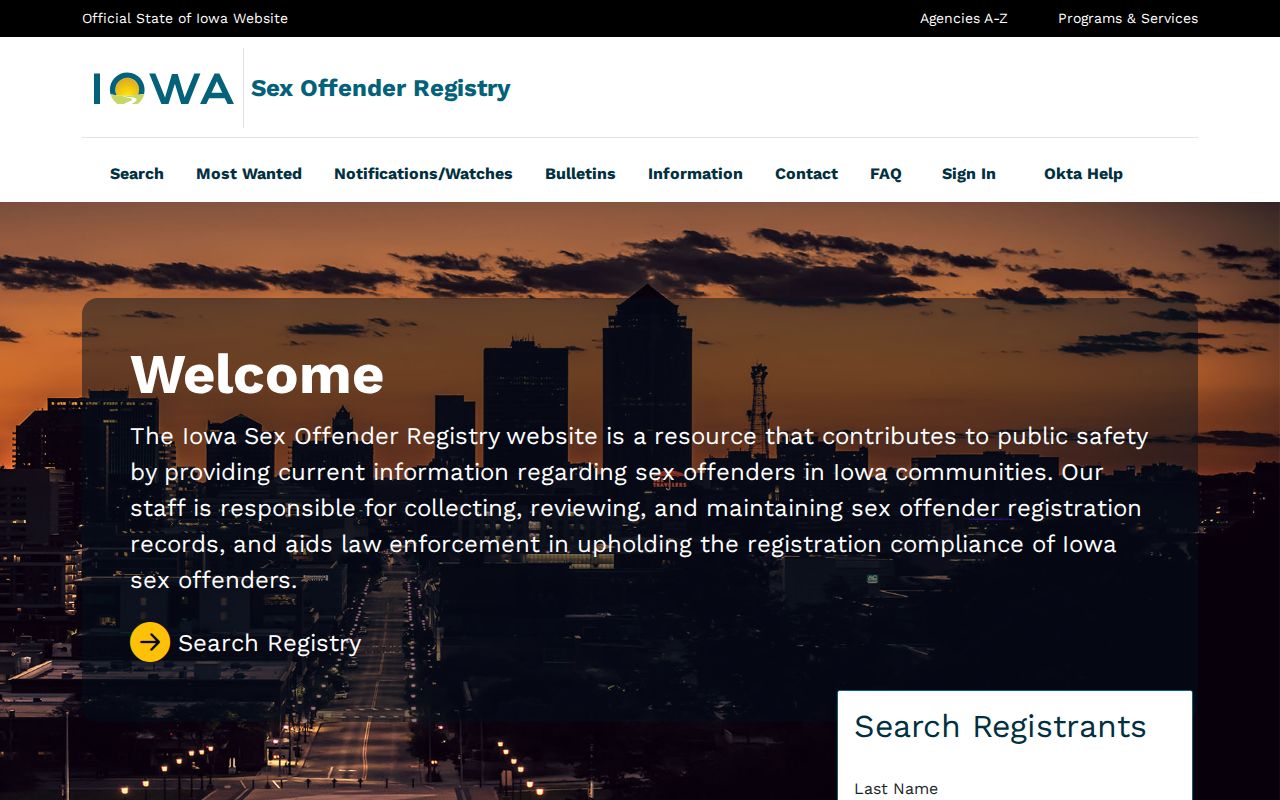
Its public controls provide several search paths while keeping all results under Iowa's statutory display rules.
Audubon County Registry Watches
A free registry watch can follow an address and radius, a city, Audubon County, a ZIP code, one registrant, or a group. Account access uses Okta. The registry says notification is sent within 60 minutes after registered information changes. That makes a watch useful for ongoing community awareness without repeated manual searches.
Updates still depend on data being received and processed. The database updates daily and can refresh as often as every 30 minutes on weekdays, excluding holidays; the home page describes typical hourly business-hour updates. These statements describe system cadence, not a promise that every real-world change appears at once.
Inside a Registry Profile
A public profile organizes registration data that Iowa law permits the registry to display. It can help distinguish same-name results and show the legal basis for registration. It does not contain every fact held by law enforcement, and it should not be read as a complete biography or risk prediction.
| Name and Aliases | Public registered name and aliases used to identify the listing. |
|---|---|
| Photo and Description | Photograph, physical traits, and scars, marks, or tattoos when public. |
| Address Information | Primary or other addresses to the extent Iowa law allows public display. |
| Offense Information | Qualifying offense, jurisdiction, statute or description, and conviction data. |
| Tier and Duration | Statutory tier plus registration start or duration information displayed. |
| Status and Updates | Compliance, vehicles, public school or work fields, and update indicators as allowed. |
Iowa Code section 692A.121 controls public visibility. Some fields can be restricted, and the required agreement warns that the public website is not the entire Iowa registry. A profile's tier describes a statutory class and verification structure. It does not forecast an individual's future conduct.
Audubon Search Results Have Limits
A no-result screen is narrower than “not registered.” Search spelling, aliases, location, public-display limits, and update timing can all affect what appears. Run more than one appropriate query when the facts support it. A name search can be paired with aliases or ZIP, while a location question may call for the map or watch tool.
Do not copy a profile into a new context or fill gaps with guesses. When a listed address appears outdated, report the suspected discrepancy to local law enforcement or through the registry's Contact Us channel. Do not visit the location or try to verify compliance in person.
Daily system updates and frequent weekday refreshes reduce delay, but neither is a guarantee of real-time accuracy. A move must first be reported and processed. Holidays can also affect the stated cadence. Treat the displayed update indicators as part of the profile, and pass a serious discrepancy to an official source.
Iowa Registration Levels and Requirements
Iowa uses three statutory tiers. Unlike a generic federal 15, 25, and lifetime chart, the Iowa tier chiefly helps set verification frequency. Section 692A.106 provides a general 10-year duration but also contains special-sentence, repeat-offense, aggravated-offense, sexually violent predator, revocation, and other rules that can lengthen or restart the period. Section 692A.107 governs tolling, when time does not count in the ordinary way.
| Tier | Iowa Structure | Verification | Duration |
|---|---|---|---|
| Tier I | Offenses classified by section 692A.102 | At the frequency set by section 692A.108 | Generally 10 years, subject to exceptions and tolling |
| Tier II | Higher classification under section 692A.102 | Every six months | Generally 10 years unless a longer statutory rule applies |
| Tier III | Most serious classification under section 692A.102 | Every three months | Generally 10 years unless a longer statutory rule applies |
Lifetime registration can apply in specified repeat, aggravated, or sexually violent predator circumstances. A longer special-sentence term cannot be shortened below ten years. Section 692A.128 provides a distinct petition framework for possible modification. Expungement of a conviction does not automatically end the duty to register.
A tier should therefore be read with the listed offense, registration status, and specific duration fields. It is a legal classification, not a score. The Iowa statute controls when an exception, tolling period, repeat event, or special sentence changes the general pattern shown in the table.
Audubon County's Limited Distance Rule
Iowa's 2,000-foot residency restriction is not a blanket rule for every registrant. Section 692A.114 applies it to an aggravated offense against a minor and measures distance from school or child-care real property, subject to the statute's definitions and exceptions. Exclusion zones are addressed separately in section 692A.113.
Registry users should not infer a violation from a map pin alone. Boundaries, qualifying status, exceptions, and current facts require official review. Suspected noncompliance belongs with the Audubon County Sheriff's Department or the registry contact channel. Section 692A.111 contains penalties for noncompliance.
Audubon Searches Beyond Iowa
The Iowa registry is the right source for its own public data, but it does not replace other states' systems. The U.S. Department of Justice National Sex Offender Public Website federates public searches across participating jurisdictions. It is useful when a person or location question crosses state lines.
The national search service shown below still depends on the public information supplied by each participating jurisdiction.
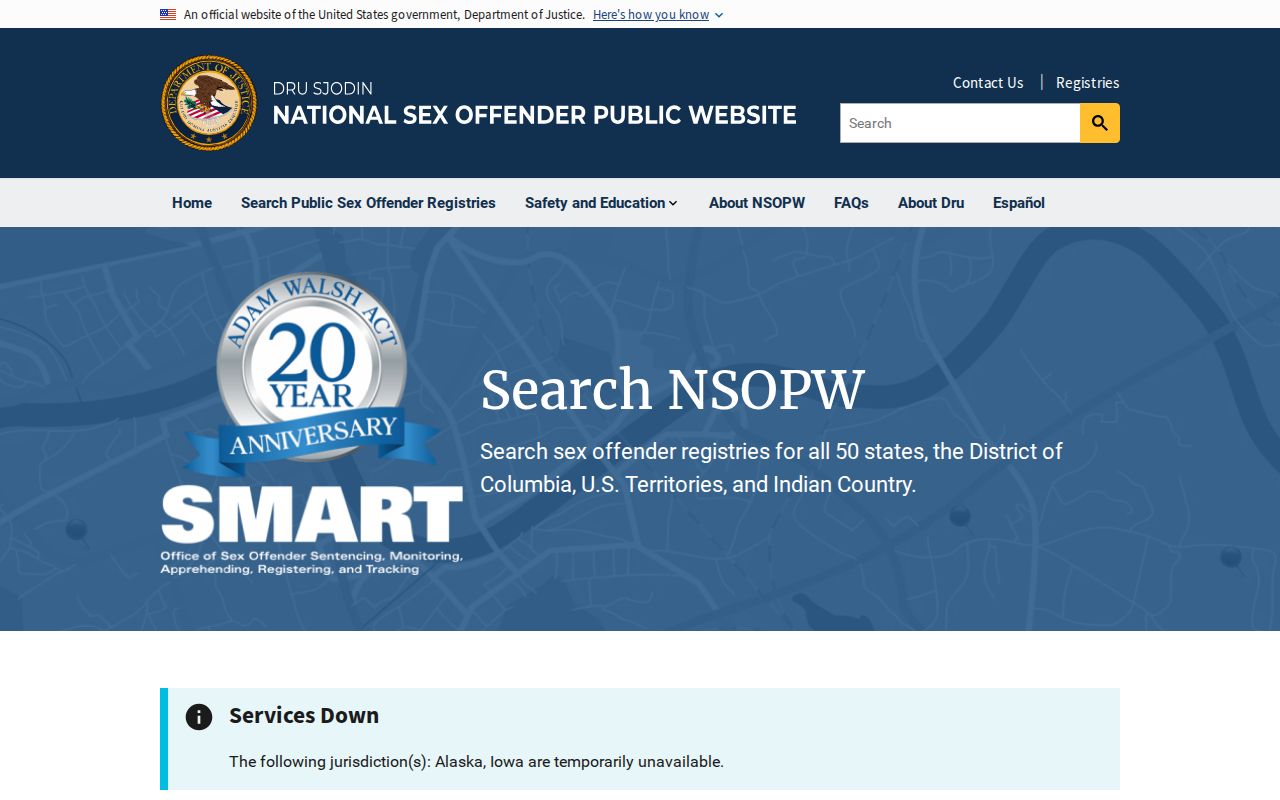
Use the Iowa profile for Iowa details and the national layer for broader geographic coverage.
Report Audubon Registry Discrepancies
The registry's official search guidance explains update timing, public watches, compliance reporting, and proper use. It appears in the image below as a direct source for questions about a result that seems stale.
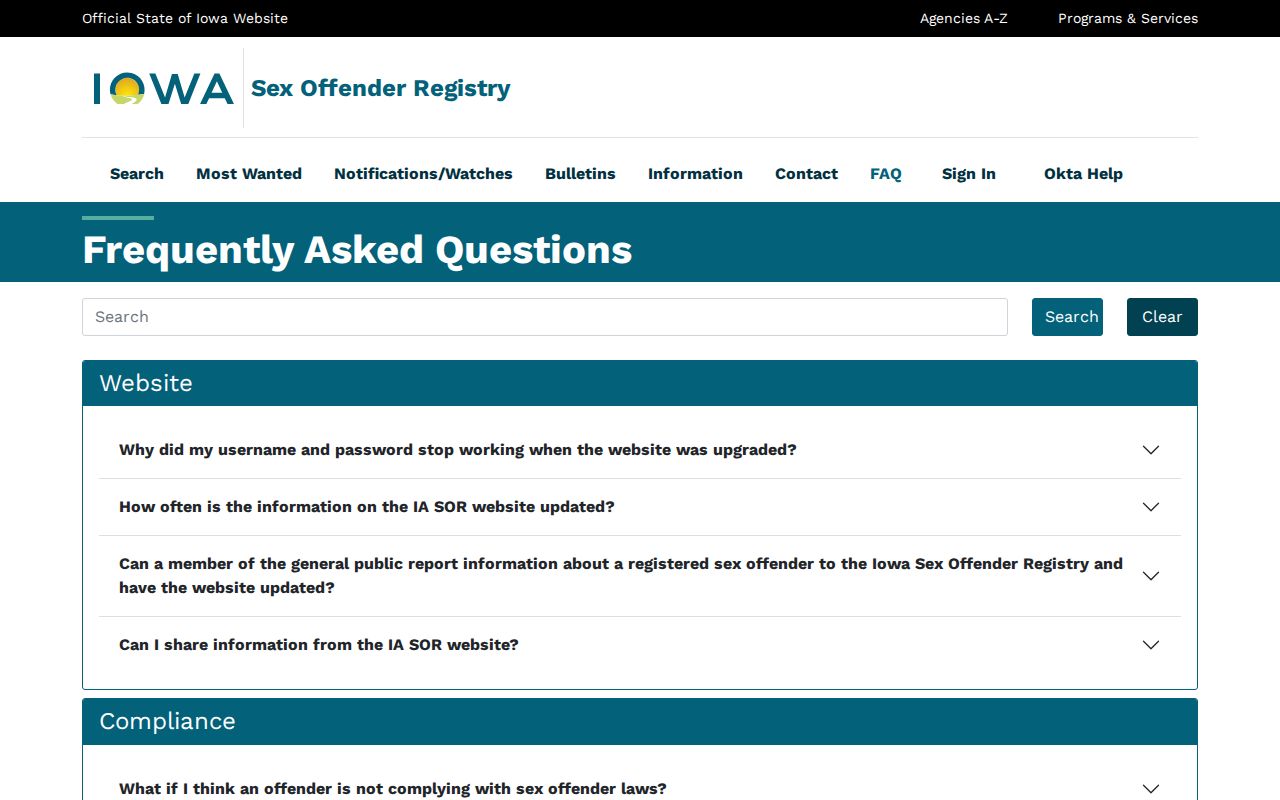
Send suspected outdated or incorrect information to law enforcement or the registry. The public should not attempt apprehension, surveillance, or direct confrontation.
Community Notification and Lawful Use
The registry exists for protection and public awareness. Audubon County residents may use public results and watches to make personal and family safety plans. Registry data must remain within lawful bounds. A profile is not permission to threaten, follow, harass, damage property, or incite others.
Iowa Code chapter 692A supplies the governing registry authority, including public access, duties, penalties, and local registration. The registry's own user agreement warns that threats, stalking, harassment, vandalism, and assault can lead to arrest and prosecution.
Lawful notice also means using official information without claiming more than it shows. A listed offense and status can guide a safety choice, but they do not authorize a public accusation about conduct that is not in the profile. When immediate danger exists, contact law enforcement. For a data concern, use the sheriff or registry reporting channel.
Misuse can be a crime: Iowa Code chapter 692A and other Iowa criminal laws do not authorize harassment, threats, stalking, assault, or property damage. Report a concern to law enforcement instead of confronting anyone.